

Tolerances - How To Choose Approriate Values
Tolerances. How do you choose their values for things that are not critical? Do you treat the tolerances as a 'target to shoot for' or 'hard limits' that if exceeded by any amount constitute a rejected part?
ASME Y14.5 2018 defines a tolerance this way:
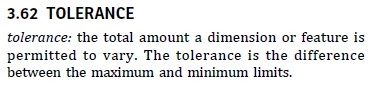
So how do you determine the actual limits of a feature, and how do you communicate your 'preferred size range' for a feature if different than the limits actually applied?
Take the top of this headed punch for example:
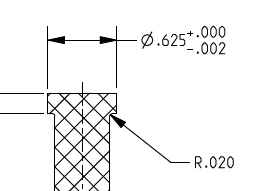
The .020 fillet has a title block tolerance of +/- .005 which means anything between .015 and .025 is 'in spec.' Does that mean we should scrap or reject something that comes in at .012 or .027? I can't imagine we would since this is not a critical feature. Even with the .625 dimension (which is much more important), if one of them arrived from a vendor at .6229 or .6251, I don't think we would reject it, even though by definition it is out of spec.
How do you handle this? Do the tolerances you apply to your dimensions really define the hard limits of those dimensions, past which you will reject the part regardless of how small the deviation? Is there some way to apply tolerances to communicate a 'preferred' value? Do you tolerance for the 'worst possible condition that can possibly work' or 'what you really hope will arrive'?