
Solved
How to prove f(x) and its symbolic evaluate ----> 0 ?
Hello Everyone.
From :
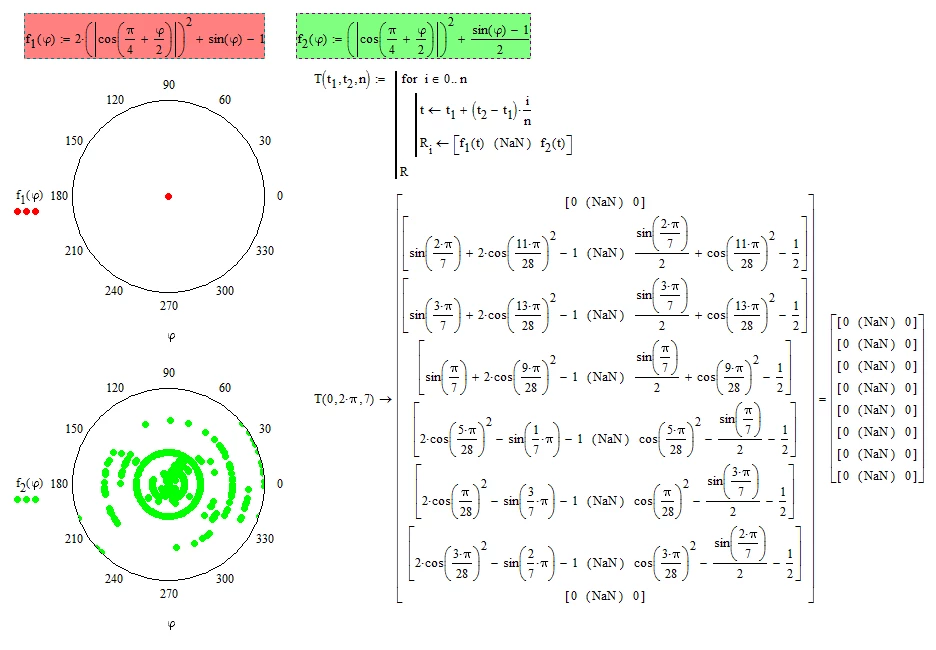
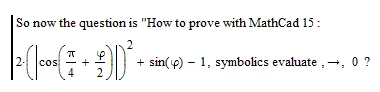
To :
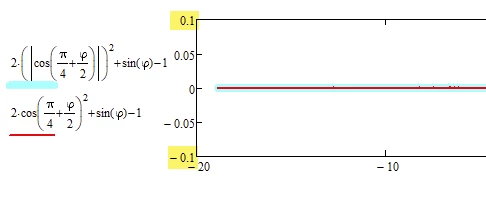
How to prove f.1(phi) symbolic evaluate ----> 0 ?
------------------------------------------------------------
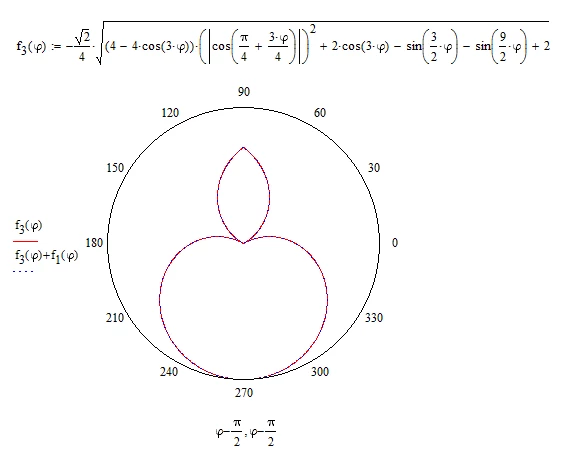
Thanks in advance.
Regards.

Hello Everyone.
From :
To :
How to prove f.1(phi) symbolic evaluate ----> 0 ?
------------------------------------------------------------
Thanks in advance.
Regards.
1) Before you symbolically evaluate you have to write phi:=phi to make phi unknown to the symbolics. Otherwise it tries to use the defined range variable phi (and therefore the result is too large ...).
2) The graph is not that unusual if you look at the scale of the y-axis. What you see are just minor numerical round-off errors in the range of +-10-15. This is to be expected with numerical evaluation - after all that's the usual precision of values in IEEE format which is used by Mathcad and most other numerical number cruncher.
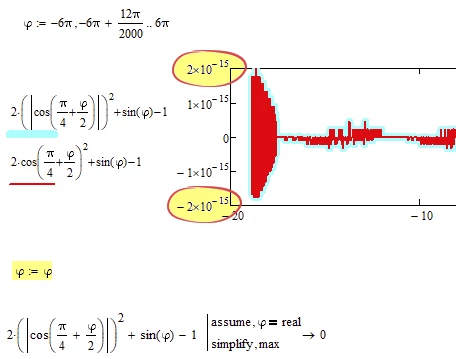
Here is what you see when you manually scale the y-axis from, let's say -0.1 to +0.1
Enter your E-mail address. We'll send you an e-mail with instructions to reset your password.