4-Participant
October 20, 2022
Solved

Creo Flow Analysis - Solid Conductivity

  • October 20, 2022
  • 1 reply
  • 4051 views

Morning All, 


I'm sure this will be a simple Q. However, I'm unable to determine how to set my simulation to apply a thermal conductivity through the model? 


I've got two heat sources on the top surface of the model, 600W source each. 
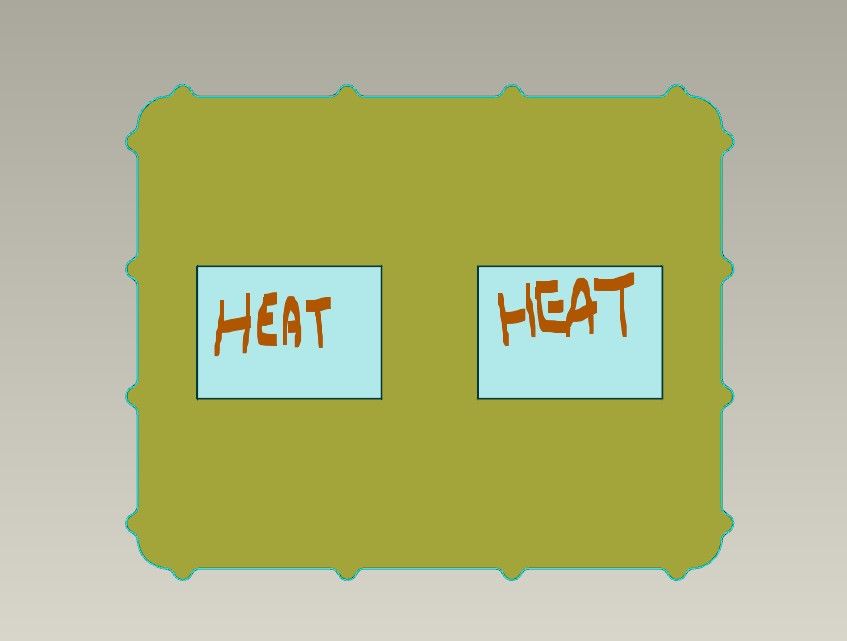
Heat-Source


I'm passing a flow of air of a series of fan blades & thus want to determine the effectiveness of the fan blades. 


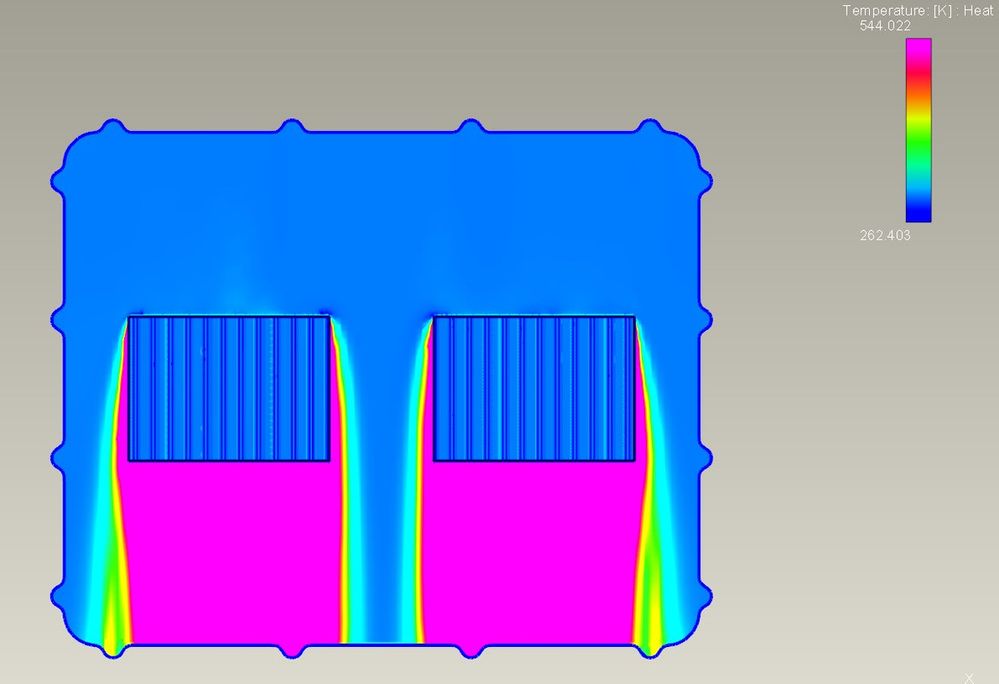
When I set the simulation up - I am able to determine the effect of the heat source on the surface of the model however I think that the heat isn't being transferred to the fins in a method I would expect. My results can be seen below. 
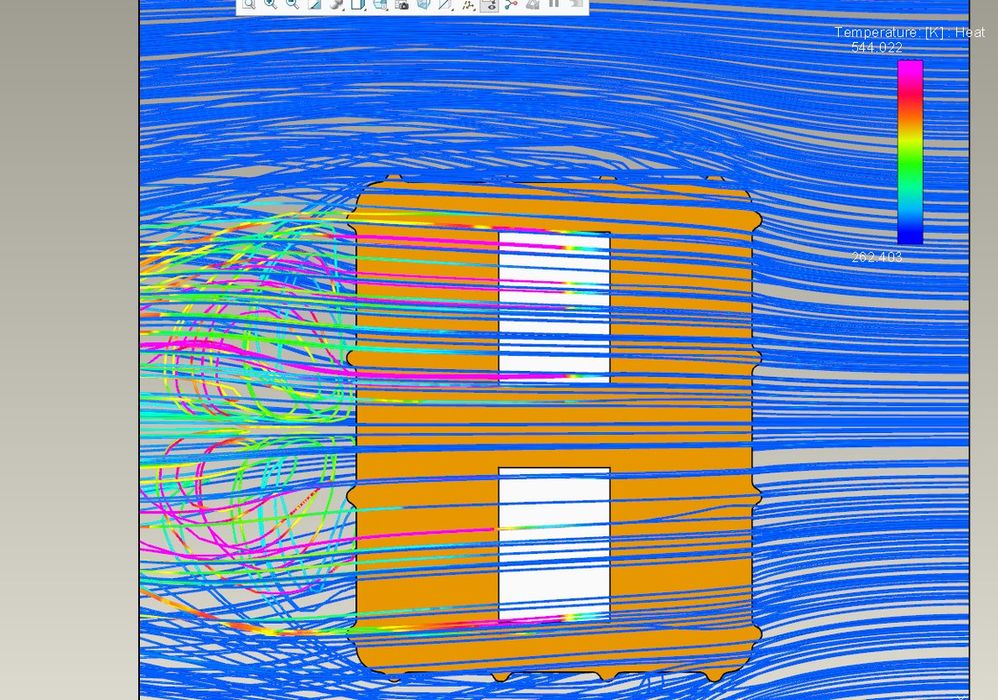
 

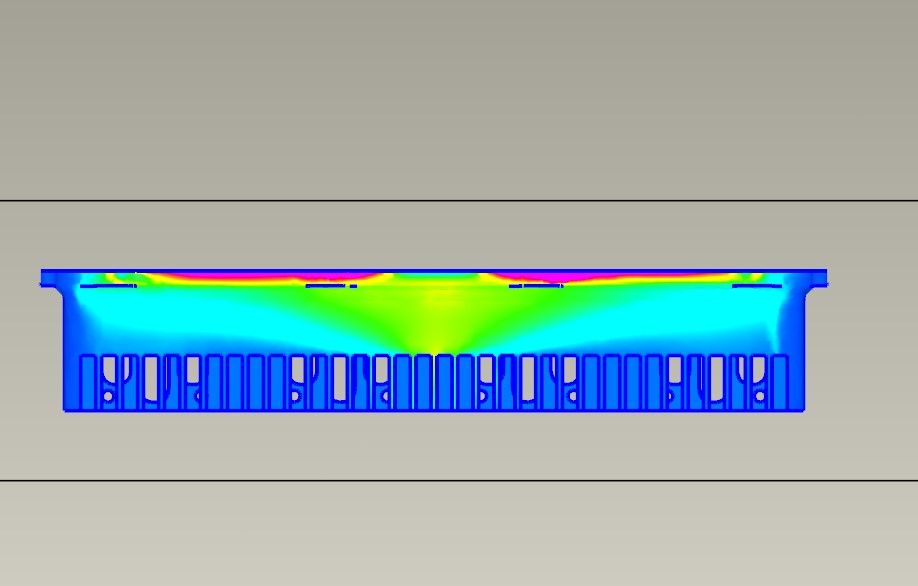
Streamline HeatStreamline HeatTop down Model View Heating EffectTop down Model View Heating EffectFront On Heating Effect Temperature EffectFront On Heating Effect Temperature Effect


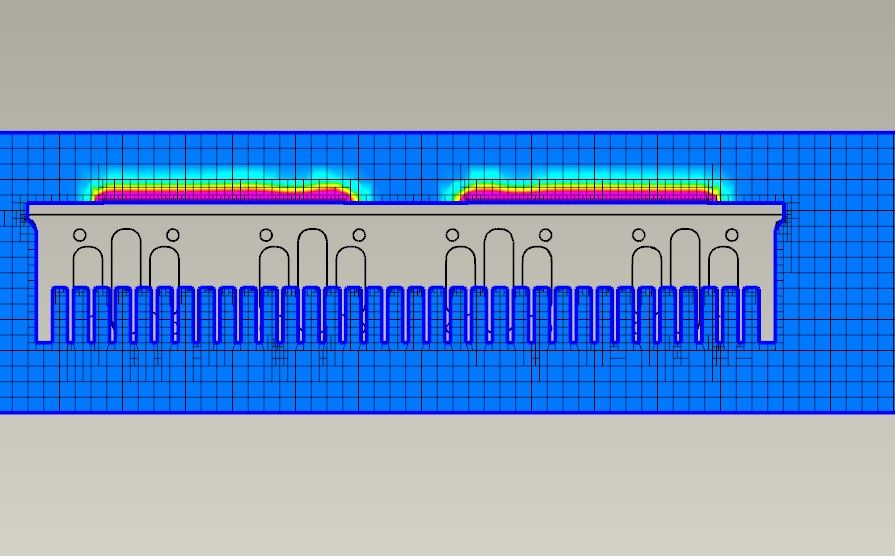
This all looked promising. However, when I section the model, I see that no heat has been transferred through the model. I can confirm this through the streamline heat, see images below. Streamline UndersideStreamline UndersideHeat X-SectionHeat X-Section
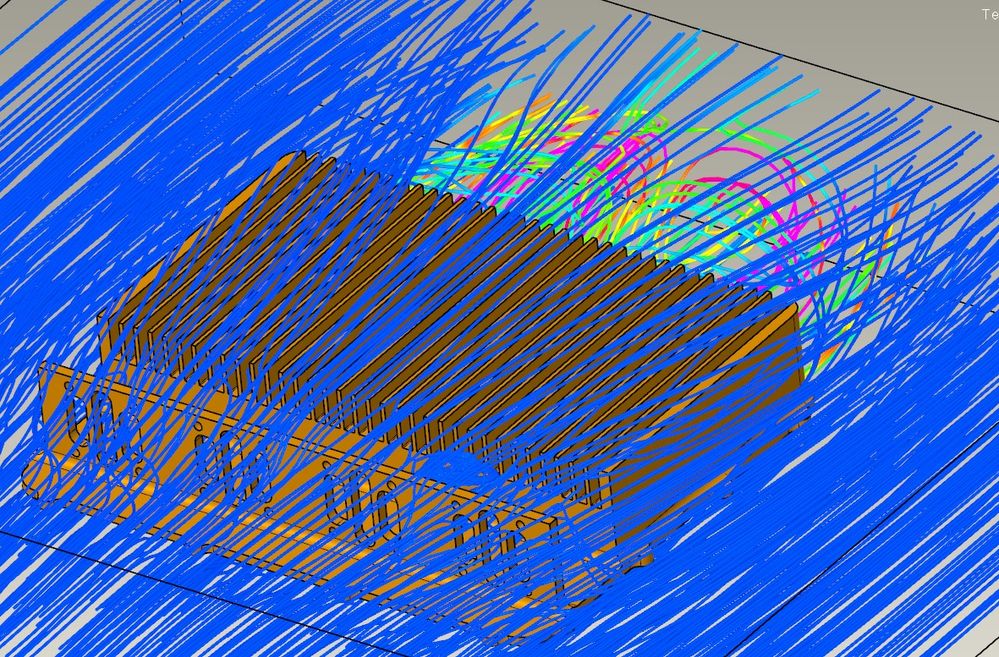
 

A little bit more of further info: 

  • Modals selected: Common / Data Exchange / Flow / Heat / Streamline / Turbulence
  • External Study 
  • Air flow: 0.042m3/s Volumetric Flux
  • Heat Source: 600W (Total Heat Flux) / Heat Direction: Inflow
  • Software: Creo 8.0.0

I hope that all make sense. Thank you for any help that you can provide. 


Edit 1: With a bit more searching I've managed to find a setting on the mesh function that meshes internal volumes. This has helped a touch; however, my next issue is that I can't get any heat transfer through the Heat Dump into the part itself. See image below. 
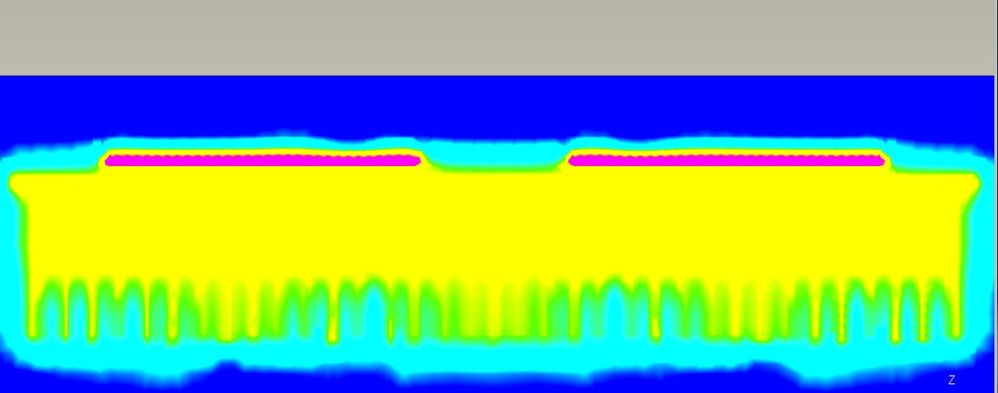
 

Temperature Step ChangeTemperature Step Change


Thanks

Best answer by tmoser

Is this a single solid part or an assembly? In your top down view, it looks like there are two parts with fins attached to a base but it doesn't look like that in the other views.

If it's an assembly:

Make sure you have material and thermal properties assigned to all of the parts

After generating the mesh there would be interfaces between the solid parts. Make sure these are conjugate walls. These might be where you would assign the heat source. There should also be interfaces between the solids and the air domain which should also be conjugate walls.

1 reply

tmoser12-AmethystAnswer
12-Amethyst
October 20, 2022

Is this a single solid part or an assembly? In your top down view, it looks like there are two parts with fins attached to a base but it doesn't look like that in the other views.

If it's an assembly:

Make sure you have material and thermal properties assigned to all of the parts

After generating the mesh there would be interfaces between the solid parts. Make sure these are conjugate walls. These might be where you would assign the heat source. There should also be interfaces between the solids and the air domain which should also be conjugate walls.

4-Participant
October 24, 2022

Hi, Thank you for your reply. In the model above i had model the IGBT as a separate body within the same model. When I changed the IGBT to seperate parts the model was working as intended. Thank you for your response. 

10-Marble
October 24, 2022

Hi, I'm following your situation and I have the same problem. I don't understand what you means:

" When I changed the IGBT to seperate parts the model was working as intended". Which parts then I have to separate?

In my case I have a simple assembly (.asm) with two parts (.prt) but  it doesn't seem to work. I have the same situation like you of the first post. My heatsink does't transfer the heat source.
Thank you for your help
Fabio