
24-Ruby IV
June 2, 2018
Question

A chain is thrown over two nails

  • June 2, 2018
  • 2 replies
  • 6449 views

Inelastic flexible chain is thrown over two nails. There is no friction, no lock. How two parts of the chain are sagging. This system has one unstable equilibrium, when the length of the sagging sections of the chain are equal - see the Mathcad 15 sheet in attach. How to calculate two other stable equilibria, when one section of the chain approaches a straight line, but remains in the form of a catenary (see the picture).
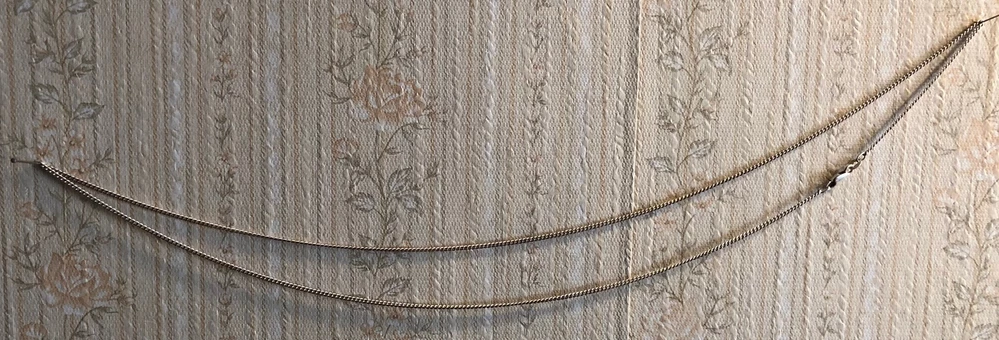
chain-2n.png 

2 replies

24-Ruby IV
June 3, 2018

One solution - an animation and a Mathcad 15 sheet in attach!

Do you know more interesting solution&

And second!

I have searched tis task in Internet - now results!

May be I have done something wrong!

Two-Chain-x.gif 


24-Ruby IV
June 5, 2018

I see on the wall and calculate with Mathcad two cases:

1.

Plot-1.png

2.

Plot-2.png


23-Emerald I
June 5, 2018

You second graph is the saddle point stability?

21-Topaz II
June 7, 2018

An animation closer to reality would be that of the following system .....

belt on two pulleys.jpg

23-Emerald I
June 7, 2018

@-MFra- wrote:

An animation closer to reality would be that of the following system .....

belt on two pulleys.jpg


No, closer to reality is that the tension in the two chains AT THE PULLEYS are equal, not at the same vertical points.

21-Topaz II
June 7, 2018

T1 and T2 are the tensions in the branches 1 and 2 at the same abscissa. In the drawing we can see that the two vectors T1 and T2 on the abscissa x, are different ....Even in the hypothesis in which the pulleys are of infinitesimal radius, the tensions on the pulleys are identical in magnitude if the only acting force is the gravitational one acting on the masses of the chains or belts..........