

Mathcad Community Challenge March 2026 - The Two Body Problem!
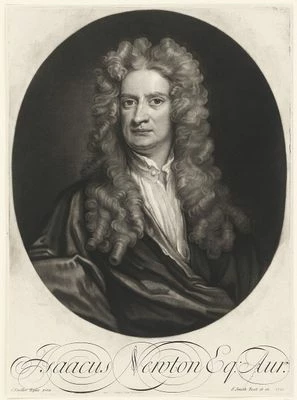 Sir Isaac Newton
This month’s challenge is inspired by one of the great unsolvable challenges of physics, the Three Body Problem. Of course, we won’t be asking you to perform the impossible in Mathcad Prime. Your challenge, should you choose to accept it, is the Two Body Problem for orbital mechanics.
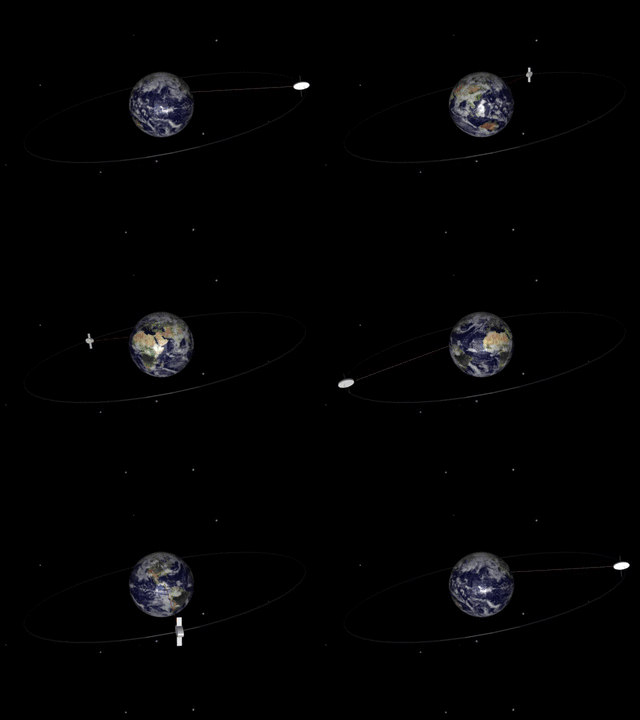 Earth-satellite two body problem
Challenge 1: Create the math functions and programs that can calculate the position, velocity, and acceleration of a Mazda Miata-sized satellite in orbit around the earth. (Why a Mazda Miata? It was my first and only car. Feel free to substitute a car of your choice.)
Choose your orbital parameters for altitude (e.g., medium-earth, geosynchronous, high-earth), inclination, eccentricity, and any other factors.
Challenge 2 (optional): Incorporate advanced input controls to change the orbital parameters.
Challenge 3: Graph the x-, y-, and z-values for acceleration versus time. Create additional graphs for velocity and position. Bonus points for using the Chart Component.
Challenge 4: Create a 3D plot of the orbit of the satellite around the earth.
Challenge 5 (optional solvable Three Body Problem variant) : Take on any special case or simplified version of the Three-Body Problem. For example, use a system consisting of the sun, earth, and Miata; or a sun-earth-Miata system with circular orbits; or a Lagrange Equilateral Triangle.
Assumptions:
- The earth and the satellite are the only two bodies in this system. You can consider the two bodies as point objects, spherical, with the center of mass at the geometric center.
- Assume Newtonian mechanics (Newton’s Law of Universal Gravitation).
- You can ignore the gravitational effects of the smaller body on the larger body.
- The reference frame is inertial (non-accelerating) and centered on the earth in the two-body problem.
- As a catch-all, feel free to include any other assumptions to help you build your worksheet.
Also, if you want to make the problem more fun, you can use two objects of the same mass (or any other variation of masses) and consider the effects of both bodies on each other!
Note: due to PTC Community moving to a new platform, the site will be in a read-only state from March 23rd to April 6th! Therefore, this community challenge will conclude… at some point after April 6th.
As always, have fun with this! Find the Mathcad Community Challenge guidelines here!