


67 - 3D Printing Classic Car Parts That No Longer Exist | Additive Restoration
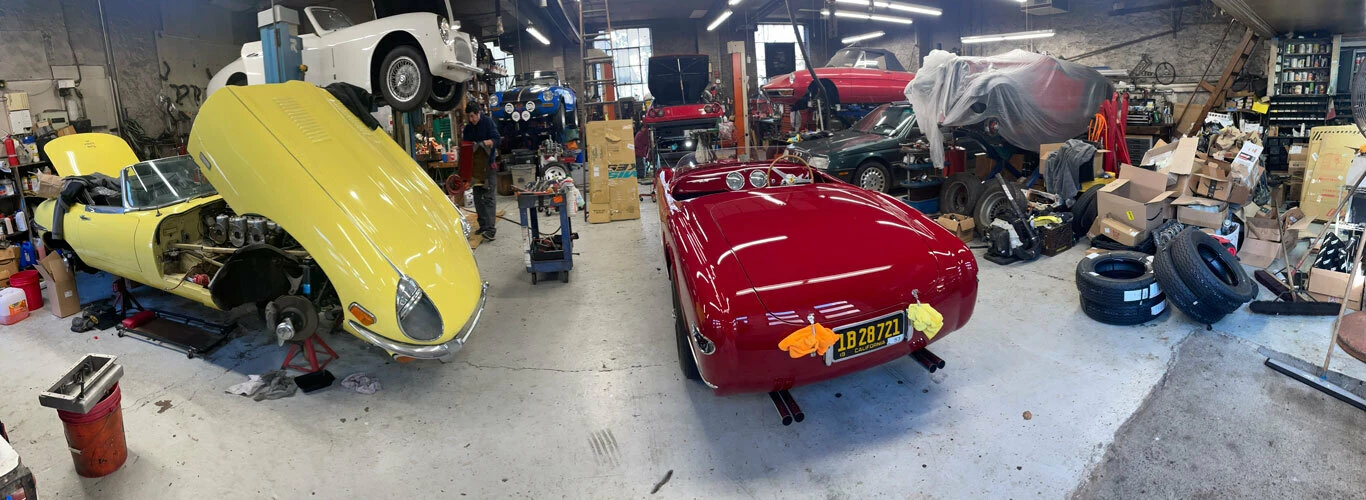
Tune in to discover how Additive Restoration uses 3D scanning, digital modelling and additive manufacturing to recreate rare parts and keep classic cars on the road.
Overview
In episode 67 of The Third Angle, PTC's podcast hosted by Paul Haimes, Steven Dibdin, founder of Additive Restoration, explains how 3D scanning, CAD and 3D printing are used to recreate obsolete parts for rare Ferraris, Alfa Romeos, Maseratis and other classic cars. PTC's Michele del Mondo then explains what restoration teaches the wider automotive industry. The episode runs 19:49 and was recorded at Dominick's European Car Repair, north of New York City
Key Takeaways
- A rotor arm made from composite resin got a 1955 OSCA engine firing properly again. The engine had been running on only half its sparks for around 20 years, and the new part reportedly added 10 to 15% power 1.
- The aim is to keep cars as they were designed. Known weak points are fixed only when the change can't be seen 1.
- A 3D scan of a valuable car works as an "expensive undo button" if the car is later damaged 1.
- Digital tools give precision, but final finishing is always done by hand, as it was for the original parts 1.
- Car manufacturers follow the same rule: scan or simulate before cutting metal or building tooling 1.
How can 3D printing recreate classic car parts that no longer exist?
Additive Restoration models missing parts digitally, makes them with 3D printing, then finishes them by hand. Steven Dibdin trained as an industrial model maker in the UK and founded the company in 2018. It runs an online parts store, takes on specialist engineering projects and offers 3D scanning for restorations. Its first big win was a rotor arm for a 1955 OSCA, a car built by the Maserati brothers. The original part had apparently been failing for around 20 years 1. Listen: 1:29 to 4:35 (founding story and the OSCA rotor arm)
Should a classic car restoration fix original design flaws?
Additive Restoration keeps cars as they were designed. It fixes a known weak point only when the fix doesn't change how the part looks. While recreating a missing airbox for a Lotus Elan, airflow analysis showed the original design was starving one carburettor of air. A small redesign that can't be seen fixed it 1. Listen: 4:35 to 7:43 (authenticity over speed and the Lotus Elan airbox)
Why 3D scan a valuable classic car?
A 3D scan records a car's shape, paintwork, racing numbers and even its historic dents in detail. If the car is damaged, specialists can use the scan to restore it to how it was. Scans also reveal quirks. On a Ferrari 166 MM Berlina, the right wing sits 18 millimetres higher than the left, which dates back to the 1950s. It was left as it is because authenticity matters more than perfection 1. Listen: 7:43 to 9:29 (3D scanning as an undo button)
How was a crashed Ferrari 275 GTB rebuilt from photographs?
The front end of an alloy-bodied Ferrari 275 GTB was destroyed in a high-speed collision with a deer. The team rebuilt it using 3D scans, the parts that survived and four photographs taken before the crash 2. They designed a wooden frame for the body from CNC-cut plywood panels that slotted together like an IKEA kit. The frame was shipped to the restoration shop, where it was used to recreate the bodywork 1. Listen: 9:29 to 14:08 (the "IKEA" Ferrari rebuild)
What can automotive manufacturers learn from classic car restoration?
Michele del Mondo, Senior Director, Global Advisor Automotive at PTC, says manufacturers should simulate before they build tooling, just as Additive Restoration scans before cutting metal. Cars now rely more on software and receive over-the-air updates, so manufacturers also need an accurate digital record of how each car is configured. Digital models let them test product variations virtually, and 3D printing makes smaller production runs and more personalization possible 1. Listen: 14:08 to 19:49 (expert take from PTC)
Resources and Community topics