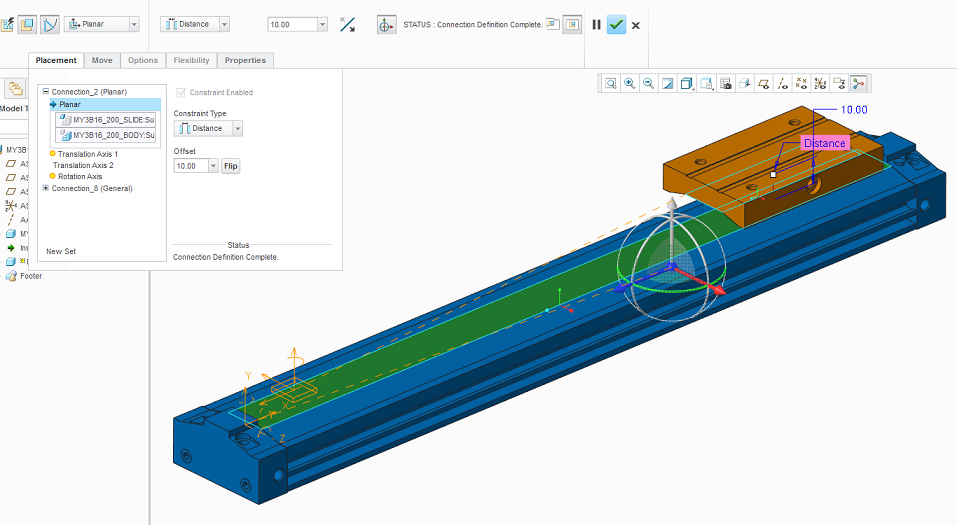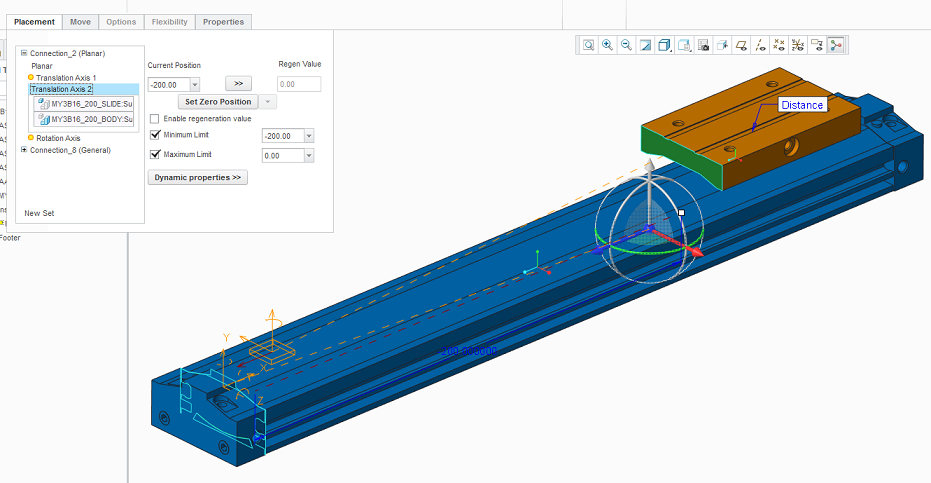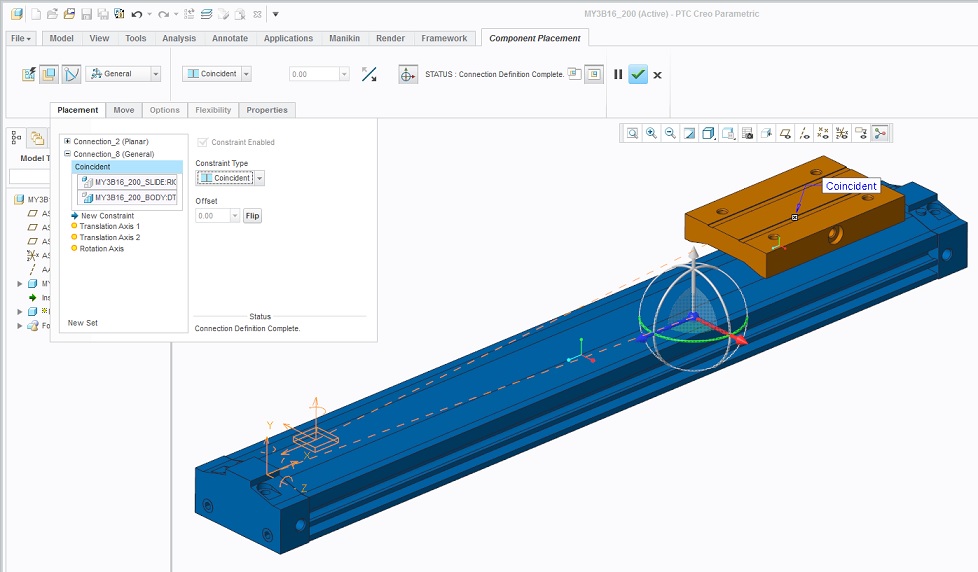

slider mechanism with no axes
Our mechanical assemblies will always need clearance for sliding parts so for the last two decades we have modeled these assemblies with offset surfaces.
The has worked well. This method of assembly is a fast, accurate, and robust way to locate components or sub-assemblies.
So the reason I’m venting here is that it would appear that this method is simply not available if the modeler uses the slider constraints.
Then the modeler is required to create some offset axis (or edge ) strictly for the damn slider functionality.
Then the user or some future user must play diagnostician and perform the damn detective work if a component or assembly is changed so the mysterious damn axis (or edge, like you said) fails to align and causes the assembly to fail.
Do remember we’re talking about the design phase here. The components and assemblies are changing (being designed)
To require the user to create an arbitrary axis (yes, or edge) is an obvious example of lazy development on the part of PTC.
The slider functionality should be easy and robust. I couldn’t imagine a much better and simpler scenario- the user defines two offset surfaces. This completely locates the part in all modes of movement except translation in one axis (get it? slider) what could be simpler. Of course then the user would define travel in the free direction (or not)
I’m sure PTC will address this issue at such a time that it can be reasonably determined that hell has frozen over.
This thread is inactive and closed by the PTC Community Management Team. If you would like to provide a reply and re-open this thread, please notify the moderator and reference the thread. You may also use "Start a topic" button to ask a new question. Please be sure to include what version of the PTC product you are using so another community member knowledgeable about your version may be able to assist.