

1-Visitor
December 4, 2014
Solved

Variable-pitch-Spring assembly with constant number of ring (coil)

  • December 4, 2014
  • 2 replies
  • 14949 views

I am trying to assembly a spring with Dia0,7mm wire dia of 5,75 coils. The first and last coil pitch is 0,7mm and other 3 coils has 3,07-mm-pitch. I cannot assembly it to the subassembly with flexible varied items. I used relation for to keep constant of pitch however during assembly it cannot be regenareted. Does anyone know what the solution is?


This thread is inactive and closed by the PTC Community Management Team. If you would like to provide a reply and re-open this thread, please notify the moderator and reference the thread. You may also use "Start a topic" button to ask a new question. Please be sure to include what version of the PTC product you are using so another community member knowledgeable about your version may be able to assist.
Best answer by TomU

Nurdan,

Take a look at the attached model. It automatically calculates the proper pitch to maintain the intended coil count. I also tied the spring geometry to the first sketch, so you can directly edit that instead of the helical sweep. Total number of turns is still controlled by the "N" parameter.

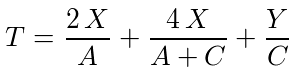
Figuring out the equation was quite challenging due to the transition zone between the initial collapsed coil and the center section. Basically the pitch of the first coil is known (pitch = wire diameter) and the pitch of the transition area is an average of the first coil pitch and the center section pitch (pitch = [first coil pitch + center coils pitch] / 2). The trick is finding a value for the center section pitch that when combined with the first coil pitch and the transition area pitch yields the exact coil count needed. The equation ends up looking like this:

Turns.PNG

T = Total Number of Turns

X = Height of first coil (typically the coil diameter)

Y = Height of center section coils

A = Pitch of first coil (typically the coil diameter)

C = Pitch of the center section

Solving the equation for the unknown, pitch "C", yields this equation:

Pitch.PNG

Implemented into Creo, it's working great, but now I think I'm ready to go watch Antonio's spring technique. This was too much work!

2 replies

17-Peridot
December 4, 2014

Welcome to the forum, Nurdan.

I think we need to better understand the problem before we can offer a solution.

Can you share a picture of what you are trying to achieve... maybe attach the failed assembly model?

I am not understanding if you are also varying the spring, or just other components in the assembly.

Is the spring suppose to follow the varied items in the sketch?

1-Visitor
December 5, 2014

Thanks Antonius.

I attached pics for the clarification. All I did was to model a simple closed and ungrounded spring and add free length as variable item. new variable length is the distance between two planes. other components are fixed, just the spring is flexible.

assembly_flexible_var_items.jpgassembly_placement.jpgspring_profile.jpgspring_var_pitch.jpg

23-Emerald IV
December 5, 2014

Flexibility doesn't do anything to a model that you can't do in the model itself. Essentially you are creating a second copy of the model (hidden family table instance) with some dimension or parameter changed. Can you open the model by itself and make the same change to it that you are attempting to make with the flexible varied item? If not, then flexing it isn't going to work.

With a spring, if you want to simulate what the spring would look like in the compressed state, then the pitch must necessarily change. Instead of using a fixed pitch for the two sections, you need to use a pitch that is based of the current length of the spring. That way when the spring is shortened (compressed), the pitch will adjust accordingly to simulate compression.

I typically model springs with two dimensions. One dimension controls the actual geometry (compressed length) and a second dimension simply controls a construction line representing the free length. The free length drives the coil count. The compressed length drives the pitch, calculated force, and visible geometry. The only time the compressed length is set different than the free length is when it's varied via flexibility.

Make sense?

1-Visitor
December 5, 2014

Tom,, that's true, I cannot make the same change in the part itself individually. But, as you told, I wrote down a relation to define pitch depending on total free length and number of coil, spring model isn't the same. since it is a closed and ungrounded spring, first and the last coils should coincident to each other with the same measurement of wire dia. Pitch should then vary with the length of the spring. I couldn't achieve that also when I tried to write down relation it didn't work.

23-Emerald IV
December 5, 2014

You are correct, the pitch for the first and last coil need to stay fixed. On the other hand, the pitch for the coils in the middle must adjust to the spring length. Take a look at the attached model. This will maintain the coil count but adjust the pitch based on the compressed length.
