17-Peridot
March 28, 2018
Question

What determines the quality of an ISDX surface, more UV lines or less UV lines?

  • March 28, 2018
  • 2 replies
  • 3874 views

New to ISDX and curious to know what makes a better surface, move UV lines or less UV lines?


I can see the surface with more UV lines is not quite as smooth as the other, but wanted to show the differences for people to weigh in on.


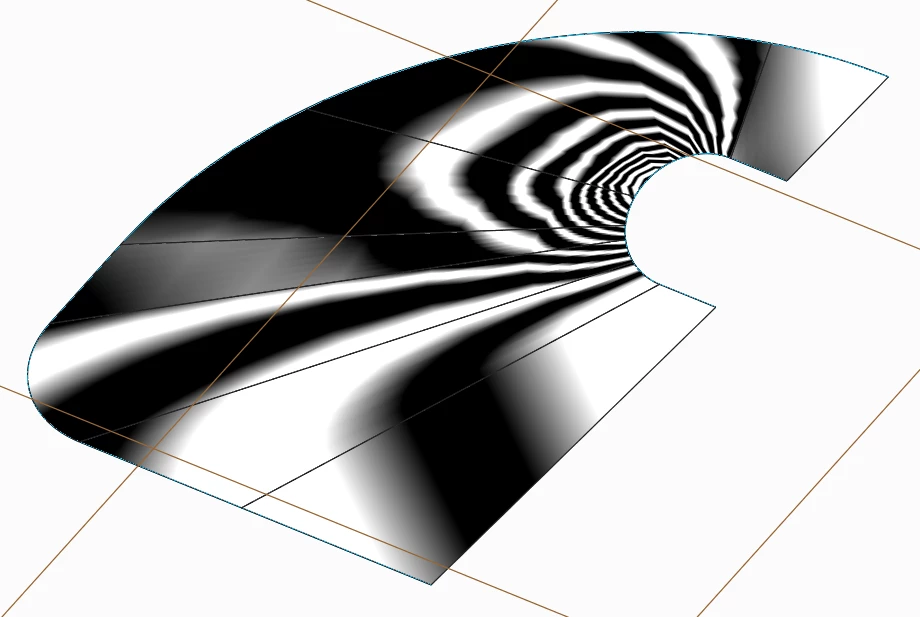
My ultimate goal is to control the reflections on this surface since it will be finished in high gloss. When I use the Reflection Analysis, I cannot get a smooth continuous reflection from this geometry. My guess is its the shape and it will be difficult to control, but I'm open to any ideas or suggestions people might have.
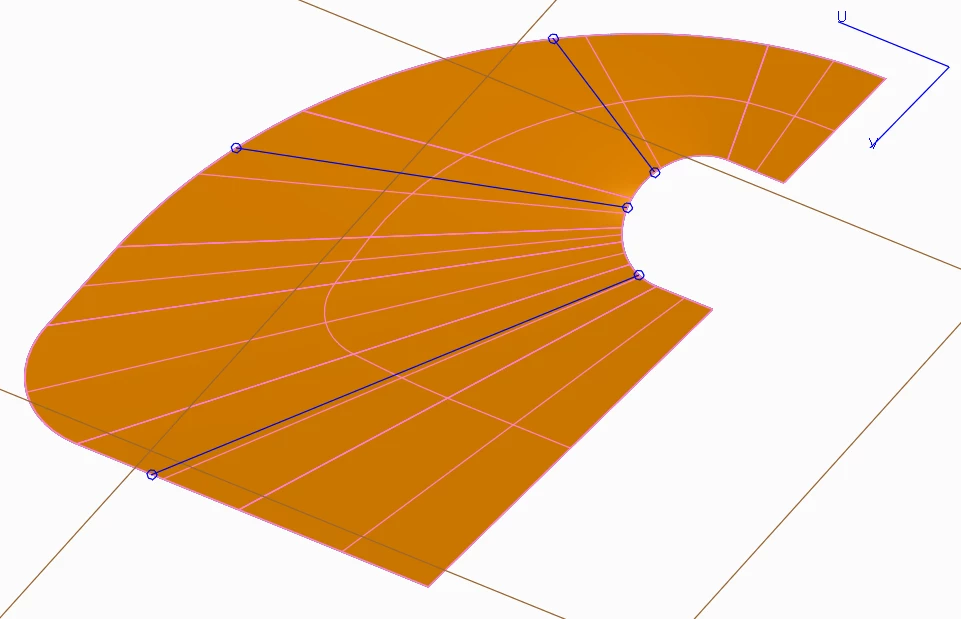
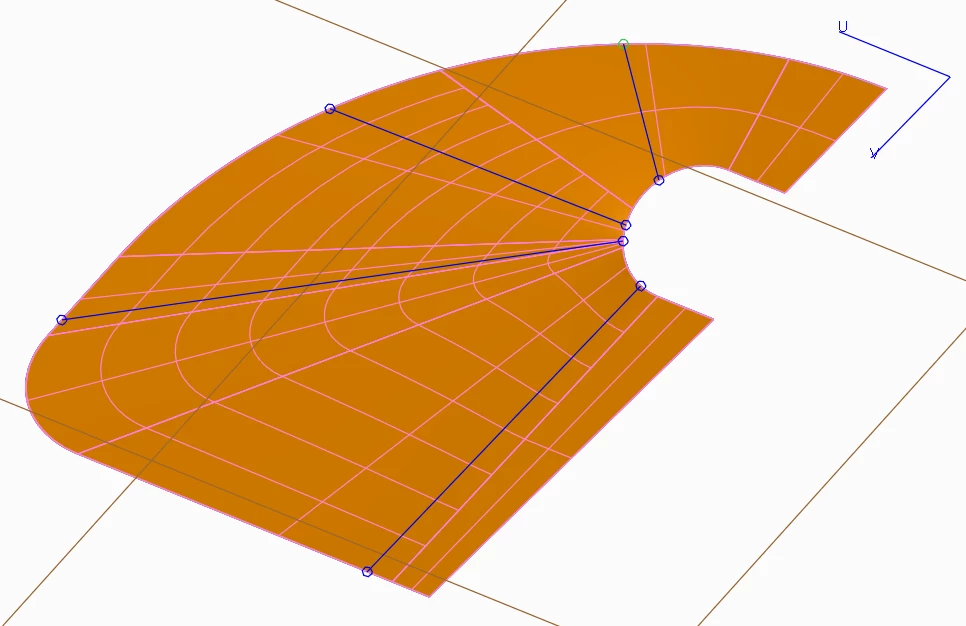
 

isdx_min_v.png


isdx_max_v.png


isdx_refelctions.png

2 replies

17-Peridot
March 29, 2018

To answer a bit of my own question, I was strongly advised by one of the best Creo users I know to use ISDX curves and not sketched curves I created in Creo Parametric. The curvature of the surface is significantly smoother with the ISDX curves. My plan is to make the ISDX surface a bit larger than needed with ISDX curves and then trim that surface to my sketched curves and/or extruded surfaces.

1-Visitor
April 23, 2018

Scott,


If you have already achieved your goal, disregard this....But...is that a planar surface/form in your image? And is that what you will end up with at the end of the project?

bbrejcha
15-Moonstone
April 2, 2018

Knots or Isoparms are how automobile designers determine complexity ... you use the word quality.  Be careful using that word it really has no meaning or metric.       Class-A has several definitions, one is always "that the surface is not built too complex or more than necessary"  Often higher order curves y=x^5 or greater is better with less Knots or Isoparms.   I teach this  Class - A workshops for design engine BTW 😉


Bart Brejcha

Design-engine.com

Bart Brejecha designengine.com