

Did you know about supporting geometry
Sometimes small geometries have to be manufactured which create a thin neck if extended to FREE_FACE. The manufacturing of those electrodes is difficult since the blank can break or bend. It's adviseable to add supporting geometry to stablilize the blank.
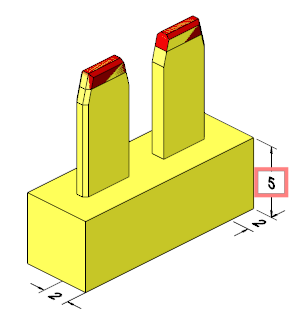
For example this is disadvantageous: 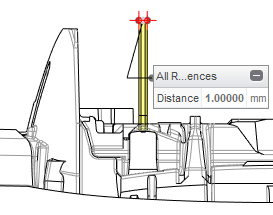
This looks much better: 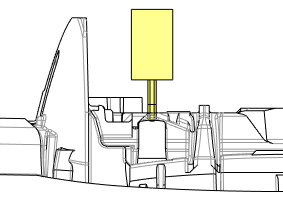
How to create supporting geomtry in SMARTElectrode
Add supporting geometry before base
| 1. | Select top surfaces which should be considered for the support. |  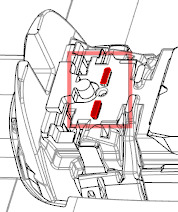 |
| 2. |
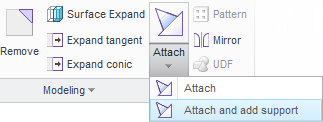
Select "Attach and add support" to connect solid with FREE_FACE. |
 |
| 3. |
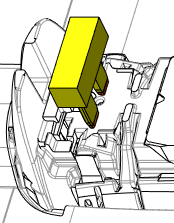
Result The dimensions of the feature can be adjusted if necessary. |
 |
Add supporting geometry later
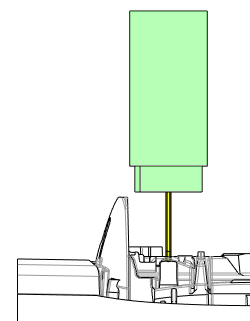
What happens if a support has to be added to an electrode which has a base already ?
This is also no problem! Just follow the short instruction below...
| 1. | Suppress the whole base group in modeltree or move the insert mark in front of the base. | 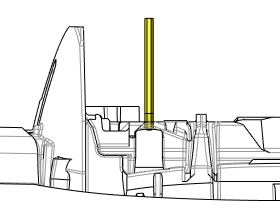 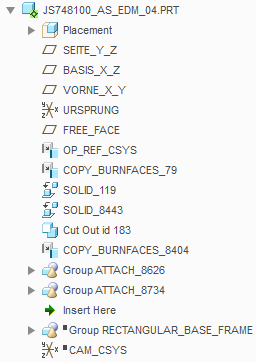 |
| 2. | Select top surfaces which should be considered for the support. | 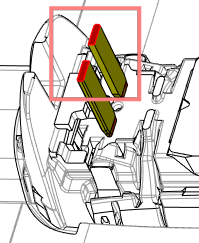 |
| 3. |
Select "Attach and add support" to connect solid with FREE_FACE. SMARTElectrode recognizes that the solid is already connected to FREE_FACE and adds only the support. |
|
| 4. |
Cancel insert mode. Result |
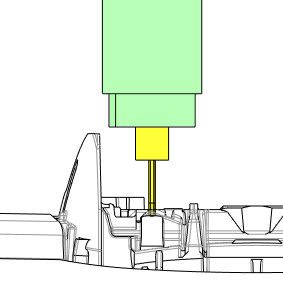 |
Related SMARTElectrode options
| ATTACH_EXTRUDE_OFFSET | Defines the default offset from the boundary of selected surfaces. | 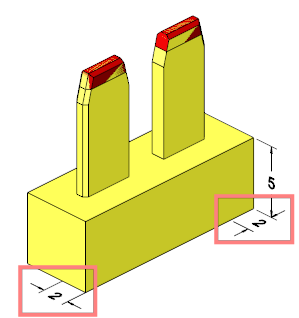 |
| ATTACH_EXTRUDE_DEPTH |
Defines the default depth for the extrusion. |
 |
This thread is inactive and closed by the PTC Community Management Team. If you would like to provide a reply and re-open this thread, please notify the moderator and reference the thread. You may also use "Start a topic" button to ask a new question. Please be sure to include what version of the PTC product you are using so another community member knowledgeable about your version may be able to assist.