p v = T and m a = k F - Not only about physics!
Imagine that you open a physics textbook and see the formula m a = k F, with the explanation that this is a mathematical representation of Newton's second law, where m is mass, a is acceleration, F is force, and k is the universal force constant... You, of course, would be surprised and say that there should not be any letter k in this formula. But you would be answered in the sense that the constant k serves to translate the force expressed in kilograms-force (an auxiliary force unit) into newtons (the base force unit). People have long been accustomed to expressing force in kilograms-force (kgf), and not in some “incomprehensible” newtons (N). That is why this formula contains the value k, called a universal force constant. Force can be expressed in other common units—in dynes, in pounds-force, and so on. But all of them would first have to be converted into kilograms-forces, and only then inserted into the formula m a = k F. Read please more ib attach.
What can you say about it?
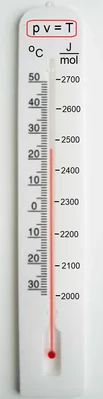
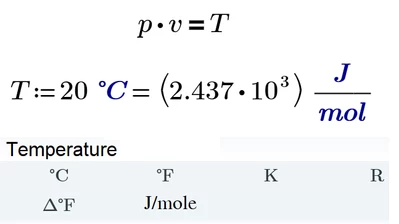
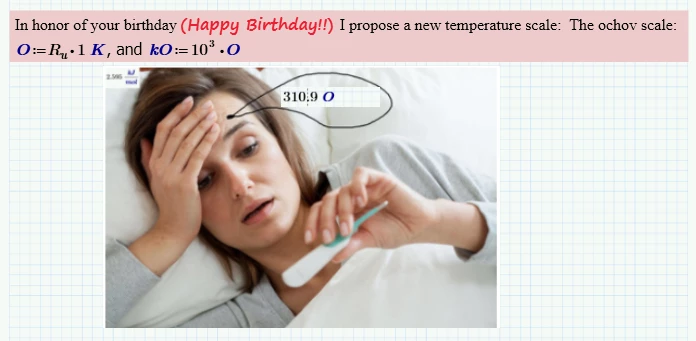
On picture for thinking: