
Solved
Water drop flight
Sorry, 1st or 2-d model is more correct?
The 1st is more understanding 
See please Prime 2 sheet in attach.
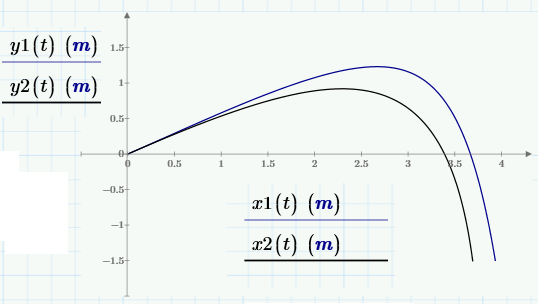

Sorry, 1st or 2-d model is more correct?
The 1st is more understanding
See please Prime 2 sheet in attach.
Thanks, Alan!
One part from my new book "Thermal engineering studies with Mathcad":
The system of equations shown in Fig. 18.1 should be, of course, much more complicated. It should more carefully consider the velocity components along the horizontal and vertical directions and the most absolute value of the velocity drops of water. These nuances are discussed on the forum - http://communities.ptc.com/message/228797. But we can restrict and simplistic solution, taking into account that the spherical drop of water during the flight will be deformed, and then break into separate small droplets. Our simplified solution gives quite believable animation. And this is enough for the initial (qualitative) formulation of the problem.
ЗЫ
No account yet? Create an account
Enter your E-mail address. We'll send you an e-mail with instructions to reset your password.