Dan, you don't need to configure Neo4j's connectivity because its an embedded database, i.e. its instantiated with the Thingworx.war file deployment, you can configure some part of how it's utilized by the ThingWorx platform in the platform-settings.json for e.g.
"NeoPersistenceProviderPackage": { "StreamProcessorSettings": { "maximumBlockSize": 2500, "maximumQueueSize": 250000, "maximumWaitTime": 10000, "scanRate": 5, "sizeThreshold": 1000 }, "ValueStreamProcessorSettings": { "maximumBlockSize": 2500, "maximumQueueSize": 500000, "maximumWaitTime": 10000, "scanRate": 5, "sizeThreshold": 1000 } },
Generally speaking Neo4j and H2 for that matter are "hardcoded" within the ThingWorx. Though you can still view the database files if you'd to navigate to \\ThingworxStorage\database\data , ThingworxStorage\database\ (for H2) Also you can check what sort of PersistenceProvider ThingWorx is using if you'd navigate to PersistenceProviders under the Data Storage, something like this :
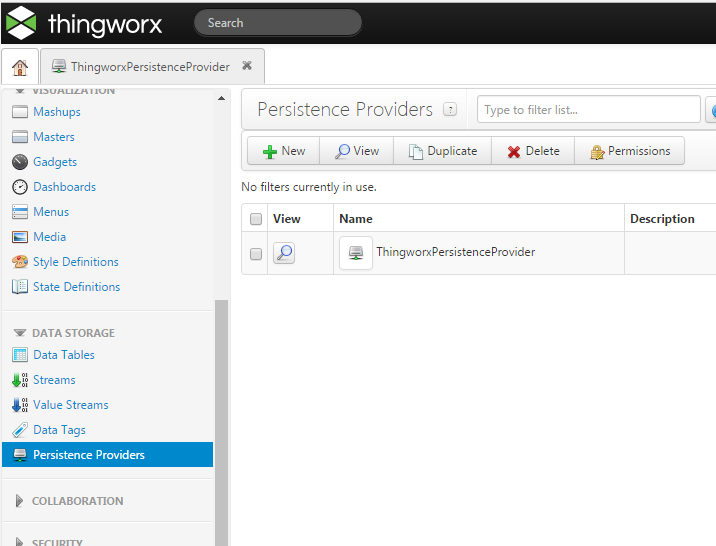
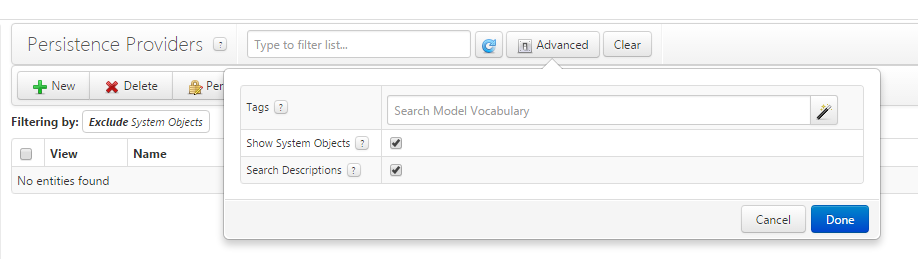
just in case if you don't see this listed, enable the visibility of system objects by :
And if you'd click on the icon you should see which DB is used as persistence provider :
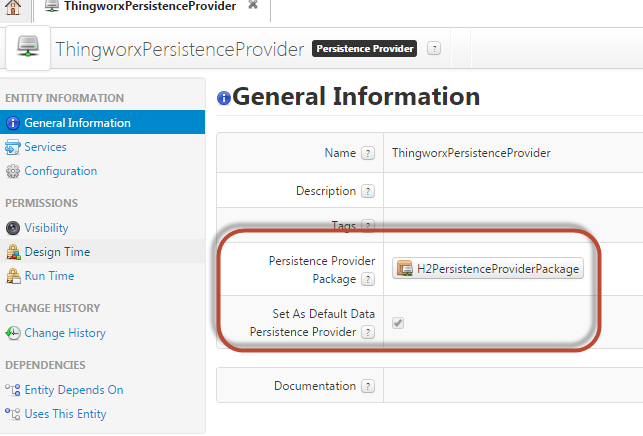
To finish my long reply, I would reiterate what Polina mentioned above you should be using H2 as Neo4j is end of support
Hope this would clarify to some extent.