PTC Mathcad is Engineering Math Software That Allows You to Perform, Analyze, and Share Your Most Vital Calculations.
Recently active
Registration has opened for the Mathcad Virtual Conference 2022! Happening September 13, 2022, 10:00 Eastern time. This will be our third annual Mathcad conference, and this year we're promising to talk only about information with demos that you will find valuable and interesting. You'll hear from... Brian Thompson, Mathcad general manager, introducing the show and discussing the current state of Mathcad Andrew McGough, Mathcad product manager, presenting an updated Mathcad Prime roadmap, along with world-premiere demos of some of the new functionality coming to next year's Mathcad Prime 9 Anji Seberino, Mathcad application engineer, showcasing Mathcad Prime's powerful design of experiments functionality Anna Novikova, Mathcad software engineer, deeply detailing the improvements made to Mathcad Prime 8's numeric and symbolic engines (including some enhancements that were not documented in Mathcad Help) A Mathcad customer and how Mathcad Prime powers his innovative structural en
This month’s challenge is related to electrical engineering. We have a simple circuit with an electrical potential of 220 Volts. Initially we have a single 10 Ohm resistor. Then we add a second resistor in parallel, with 10% higher resistance. Then we add a third resistor in parallel, with 10% higher resistance than the previous resistor. And so on. Calculate the current in the circuit for the single resistor case. Calculate the resistance of each additional resistor and current through each resistor for 2, 3, 4, 5, and 10 resistors in parallel. Can you write a function or program that calculates the resistance of each resistor and current through each resistor for n resistors in parallel? These calculations are fairly straightforward, so it will be interesting to see what tools – vectors, matrices, loops, plots, charts, etc. – that you use to solve the problem. As always, how you document your calculations is important as your worksheet will be visible to the community. Here is an e
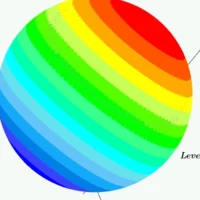
This month's challenge is another geometry-based challenge - but it's non-Euclidean geometry. Given the following three points on a circle of radius 10 units, calculate the area of the spherical triangle: (5.339, 6.948, 4.819) (-4.018, -3.703, 8.375) (6.455, -6.679, -3.705) (Note that the point coordinates are rounded to three decimal places.) Optional: Can you write a program or function that calculates the area for any three points on the surface? Is there a symbolic evaluation for three generic points (a,b,c), (d,e,f), and (g,h,k)? Here is a 3D model in Creo 9 of the sphere and points: Find the Mathcad Community Challenge Guidelines here! Edit: the coordinates of the second point were incorrect. Wildly incorrect. I have no idea how I wrote down the wrong numbers.
The first two challenges were biased towards mechanical engineering. May’s challenge pertains to geometry. Create a worksheet in which you calculate (1) the diameter of a circle and (2) the length of a side of a square that yields the minimum combined area for a combined perimeter of 1 meter. This is an optimization problem. What tools within Mathcad can provide you with a result? Optional: How can you depict the results? Can you use a 2D plot or Chart Component to visualize the answer?Find the Mathcad Community Challenge Guidelines here!
This video gives a quick demo on how to configure Mathcad Prime with floating license server.
Let’s face it, planetary gears are cool. They are used in all kinds of mechanisms, including transmissions, motors, and turbines. Your challenge, should you choose to accept it, is to use Mathcad to build a worksheet that calculates the gear ratios and output speeds of a planetary gear under different configurations. The math behind the gear ratios is straightforward. But users should be able to select: The sun or planet carrier as the input; The planet carrier or ring as the output; and, The ring, sun, or planet carrier as the stationary component. How can the user select the desired component? How can you add intelligence to the worksheet to prevent an incorrect combination of input, output, and stationary? What inputs do you want for your calculator? You will have to make some choices. Your choices could include: Number of planets Number of teeth Component diameters Module / pitch Tools that you might consider include Combo boxes, programs, and functions involving strings. Here
Hi all!I'm pleased to announce that while Mathcad Prime 8 is releasing March 2022, we at PTC have just published a blog article letting you all know in advance what is being included! And PTC Community are the first ones to know.Check it out:https://www.mathcad.com/en/blogs/whats-mathcad-prime8 We'll post another announcement when Mathcad Prime 8 is actually released. In the meantime, we've opened up registration for our accompanying What's New in Mathcad Prime 8 webinar coming March 22, 2022. I plan to moderate it, with Mathcad product manager Andrew McGough demoing the functionality in much more detail. The webinar will end with a live question and answer session. Mathcad Prime 8 Webinar March 22 (Note that I'm not able to answer your Mathcad Prime 8 questions on this post, but Andy will certainly be able to in that webinar.) Thanks!
Mathcad Contest Idea - January 2022 Plane Truss Mechanics Can you use Mathcad to solve this problem? This comes from page 88 of “An Introduction to the Mechanics of Solids,” by Stephen H. Crandall, Norman C. Dahl, and Thomas J. Lardner. This was the text for the first mechanical engineering class (2.01 Mechanics) that I took my sophomore year at MIT way back in 1989. You can find the book for as little as $5 on Amazon. It shows three different solutions for the problem, including: closed-form solutions involving equilibrium of forces and the beam-deflection equation a computer program called IBM STRESS Castigliano’s theorem which solves via elastic energy. Any introductory mechanics text or a Schaum’s Outline should guide you to a solution. As with the other contests that will follow this one, the point is not the answer to the problem, but your execution of the solution. Some ideas you may consider including in your worksheet: Allowing the user to change the material via a
A Mathcad user for 25 years, Professor Valery (‘Val’) Ochkov takes to the mountains when not involved in developing training and educational software for fossil and nuclear power plants. He’s shown below in the Chimbulak region of Kazakstahn. Val has long been involved in the Mathcad community! See the photo of the “Mathcad Clock.” This is from a post back in 2010! Beyond answering questions, Valery is also known for using math equations to create designs and authoring Mathcad trivia challenges for other community members to participate in. Some of the more entertaining challenges might be the Hare and Snell’s law and the Problem of Cockroach Races. The Bicycle Post where Valery quizzes the community on how to solve “How many strokes with a bicycle pump need to be done to inflate the tire to 5atm” also inspired engagement.When asked for hobbies that don’t involve hiking boots, Val assured us his hobbies really are writing books and articles
https://www.engineering.com/story/my-top-3-engineering-nightmares-expert-shares-the-truth-on-software-selection Anji Seberino, the head of our PTC Mathcad Application Engineer team, recently took some time to interview with engineering.com about her top 3 engineering nightmares accumulated from her own experience as an engineer. From missing units to debugging custom code to trying to reverse engineer IP stored in crazy, inherited spreadsheets, you too have probably faced these issues in your time in the industry when not everyone is using the right software and processes. Let us know what you think of the interview!
I'm sharing a recent long-form interview that PTC's CAD/engineering calculations general manager, Brian Thompson, had with engineering.com: https://www.engineering.com/story/video/for-power-mathematics-retire-the-spreadsheet Alongside with the video interview, there is also a written transcript. You don't have to share any of your own information to access it. For Power Mathematics, Retire the Spreadsheet Brian talked through a wide variety of topics, including why engineers and research scientists across many various industries choose PTC Mathcad and how those customers use it, the old and painful days of trying to perform complex calculations in spreadsheets, and some glimpses into the future of Mathcad.
This is the worksheet that corresponds with the blog post Painting Easter Eggs with PTC Mathcad. Play around with it and paint your own Easter eggs. Be sure to show us what you create!
Are you making the most of your engineering calculation software? Join a free webcast exploring the fundamentals of data analysis. Presented by Anji Seberino, PTC’s leading Mathcad expert, the online event takes place Thursday, June 25 at 10 am PDT and 1 pm EDT. REGISTER NOW! Anji will focus the session on the basic principles of analyzing data in Mathcad. You’ll learn about Interpolating data Filtering data Fitting data to a curve This webcast is part of the weekly education series for engineers who want to learn more about PTC Mathcad as a powerful alternative for engineering calculations. Visit the registration page to view weekly topics and sign up today to join in.
Are you making the most of your engineering calculation software? REGISTER NOW for a free webcast that explores solving and optimization. Presented by Anji Seberino, PTC’s leading Mathcad expert, the online event takes place Thursday, June 18 at 10 am PDT and 1 pm EDT. Anji will focus the session on solving linear and nonlinear systems. Plus, you’ll learn how to set up and solve optimization problems. This webcast is part of the weekly education series for engineers who want to learn more about PTC Mathcad as a powerful alternative for engineering calculations. Visit the registration page to view weekly topics and sign up today to join in. REGISTER NOW!
Are you making the most of your engineering calculation software? Join a free webcast that explores using Mathcad and Excel Together. Presented by Anji Seberino, PTC’s leading Mathcad expert, the online event takes place Thursday, June 11 at 10 am PDT and 1 pm EDT. Anji will focus the session on different methods for importing and interacting with Excel data in Mathcad. Plus, you’ll learn best practices for using Excel data in the following: Calculations Plots Mathcad programs This webcast is part of the weekly education series for engineers who want to learn more about PTC Mathcad as a powerful alternative for engineering calculations. Visit the registration page to view weekly topics and sign up today to join in.
Are you making the most of your engineering calculation software? Join us in a free webcast exploring symbolic calculations in PTC Mathcad. Presented by Anji Seberino, PTC’s leading Mathcad expert, the online event takes place Thursday, June 4 at 10 am PDT and 1 pm EDT. Seberino will focus the session on operations available through Mathcad’s symbolic calculation engine. Join in for an introduction to common and useful symbolic operations such as Symbolic solving Laplace transforms Variable substitution This webcast is part of the weekly education series for engineers who want to learn more about PTC Mathcad as a powerful alternative for engineering calculations. Visit the registration page to view weekly topics and sign up today to join in. Register Now!
There's more to this Easter egg than meets the eye. This Easter Egg was created with a Mathcad Prime 6.0 Surface Plot, all within PTC Mathcad. Download the attached Mathcad Prime file (EE.mcdx), manipulate the surface plot display, and see if you can find the hidden message. h/t Anji Seberino!
Full list of worksheets WriteSTL allows Mathcad users to create 3D models mathematically using PTC Mathcad then save them as STL files, perfectly suited for incorporation to CAD assemblies. Along with the README, the WriteSTL.zip file contains two worksheets, showing 2 different matrix styles possible to generate 3D models. WriteSTL takes an array of triangle vertices. The included PTC Mathcad worksheets demonstrate inline routines to convert each matrix type to triangle vertices arrays. Also included is the WriteSTL Custom Function compiled and linked for the Windows 7 64-bit platform. The MS Visual Studio project with source is included for anyone needing to build for different Windows Platforms. Microsoft has a free, Express version of Microsoft Visual Studio customers are using to successfully build PTC Mathcad Custom Functions.
Hi All – I want to announce a critical bug fix release of PTC Mathcad Prime 4.0. We recently discovered an issue where some password protected areas can become corrupted on save/open. This is an issue we feel important enough to fix in a maintenance release. We’ve investigated the issue, submitted and tested a fix and will be releasing PTC Mathcad Prime 4.0 M010 later today. Anyone using Prime 4.0 F000 should upgrade to Prime 4.0 M010 – we’ll be removing Prime 4.0 F000 from download to make sure only the fixed version is available. We do our best to avoid situations like this but sometimes bugs happen and when they do, we assess them to understand the impact on users. If they’re critical issues, such as this one, we do our best to fix them as soon as possible. Many thanks, Andy.
Join us on January 22nd, at 1:00 pm ET for PTC’s Virtual Event – Leverage Engineering Calculations in Your Design Process. This webcast will demonstrate how the correct handling and reliable documentation of engineering calculations can greatly impact the success of your project, as well as: Discuss the challenges in leveraging engineering knowledge in your product design process. Take a deeper look at Mathcad’s capabilities and how it can help solve your engineering problems. Explore how the Engineering Notebook records critical product information in the model itself. Reserve your seat today!
This is the worksheet corresponding to the blog post Curve Fitting Made Easy.
Recently, we announced the availability of PTC Mathcad Prime 4.0. It’s the next step in the evolution of your favorite engineering notebook, with even more tools for precise calculations and straightforward documentation.Join us for a live webcast with Luke Westbrook, PTC Mathcad Application Engineer. He’ll cover some of the new features we’ve focused on in recent blog posts, but with more in depth and with practical examples. No infomercials, just content. We promise.What you’ll see:New ways to share your work with complete confidence that sensitive content remains unexposedThe software’s increased interoperability with 3rd party applicationsPerformance enhancements and usability improvements to help you work more efficientlyThe webcast takes place March 15, 2017 at 2pm EST. Save your spot for this detailed rundown of the new capabilities and how they strengthen your collaboration and calculations.If You Wait, You’ll Miss OutBy now, we all know that any good webcast will be available
Let’s say that you want to run a Mathcad Prime worksheet at a specific time of day without user intervention. For example you need to generate Excel reports overnight, do some computations with the extracted data, and have the files ready first thing in the morning. Using Windows 7 with Mathcad Prime, you can do it. This article shows you how. - Excerpt from blog post by Iulia SavuThe VB script mentioned in the article can be downloaded here.
This video gives a quick demo on how to configure Mathcad Prime with locked / Standalone license after receiving the license file via e-mail.
This video gives a quick demo on how to convert legacy Mathcad files (.mcd, .xmcd) to Mathcad Prime format (.mcdx)
Already have an account? Login
Enter your E-mail address. We'll send you an e-mail with instructions to reset your password.